
Boots on the Ground: The Effects of Mass Mobilization on Military Policing
Affiliation
Heidelberg University
Supervisor
Professor Aurel Croissant

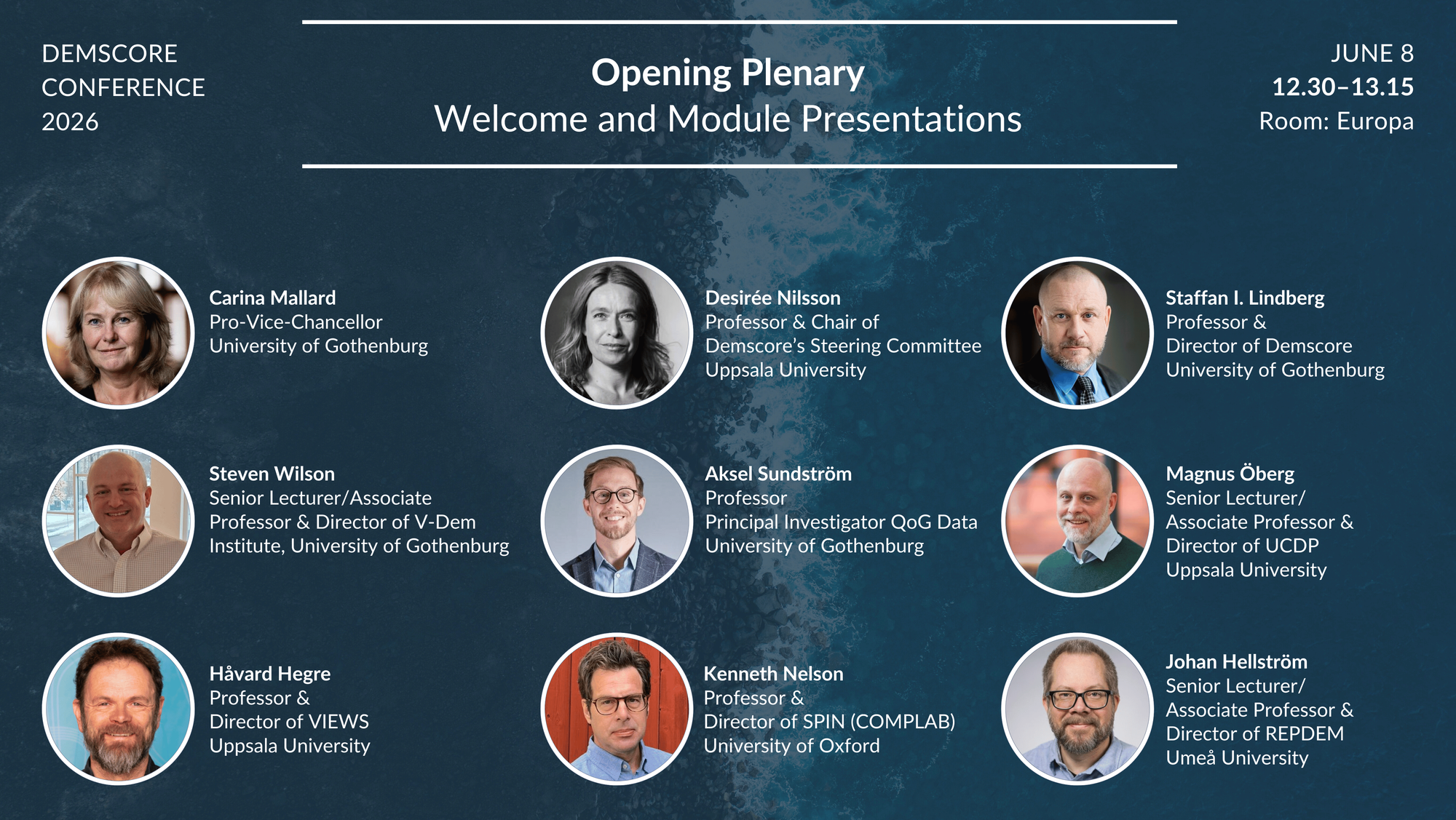
Professor Staffan I. Lindberg (University of Gothenburg) opened the 4th DEMSCORE conference and welcomed DEMSCORE’s partnering modules: V-Dem, QoG, UCDP, VIEWS, COMPLAB, and REPDEM. Combining almost 200 datasets and granting access to over 25,000 variables across more than 200 countries over time, DEMSCORE represents a significant contribution to data harmonization in the social sciences.
In her opening remarks, Pro-Vice Chancellor Carina Mallard (University of Gothenburg) commended DEMSCORE for developing the infrastructure and acting as a leading hub for accessible, open, and well-documented social science data. She emphasized that this contribution is particularly important at a time when open access to data is under increasing pressure.
Professor Desirée Nilsson (Chair of DEMSCORE’s Steering Committee, Uppsala University) underlined the real-world relevance of DEMSCORE’s work, pointing to the profound global challenges that its data helps researchers address: armed conflicts at their highest number since WWII, autocratization reaching unprecedented levels, freedom of speech under pressure, and societies grappling with migration and environmental change. With over 17,000 users and 5,000 downloads, she emphasized that the data is not only being produced but actively used.
The conference was followed by module presentations by DEMSCORE’s partners: Steven Wilson (V-Dem), Aksel Sundström (QoG), Magnus Öberg (UCDP), Håvard Hegre (VIEWS), and Johan Hellström (REPDEM).
Panel 1 and 2
Panel 1
Conflict, Peace, and Intervention
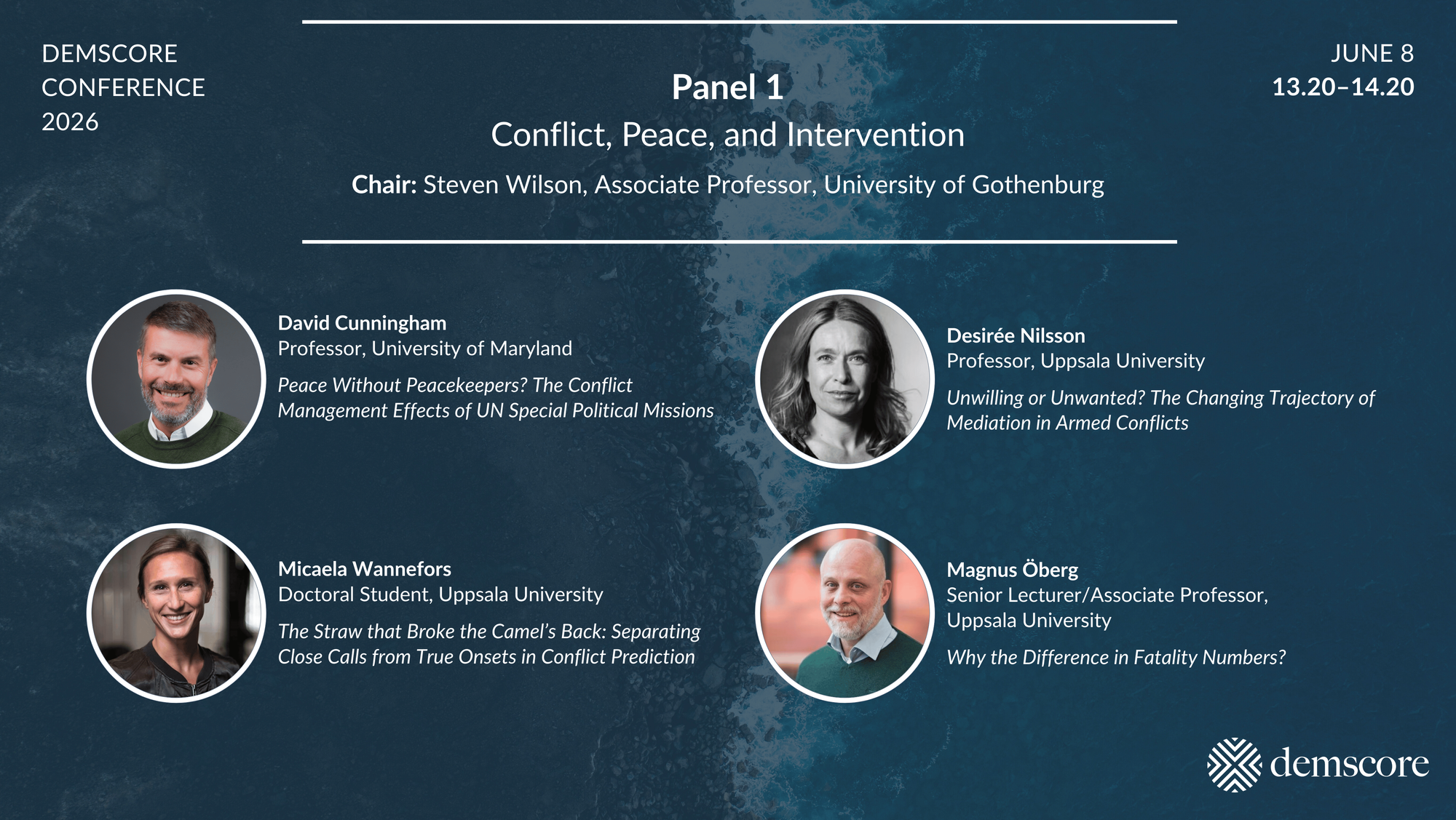
Panel 1 focused on conflict, peace, and international intervention, bringing together research on mediation, conflict management, and the challenges of measuring and predicting armed violence in a changing geopolitical landscape. Drawing largely on data from the Uppsala Conflict Data Program (UCDP), the presentations highlighted how both conflict dynamics and international responses to them are changing. Across the panel, a common theme emerged: traditional tools of conflict management are outdated and insufficient to capture and understand conflict, and new approaches are needed to better understand violence, resilience, and peacebuilding.
David Cunningham (University of Maryland) opened the panel with his research on the role of UN Special Political Missions (SPMs) in conflict management at a time when traditional peacekeeping missions are declining. Using UCDP, V-Dem, and QoG data together with new data on SPMs, his research assesses whether these non-military missions can reduce fatalities, shorten civil wars, and support democratization. He finds that SPMs with more personnel are associated with reductions in government killing of civilians. As geopolitical tensions and funding constraints in recent years have affected peace operations, David’s research highlights the increasing role of alternative forms of international intervention and conflict management.
Desirée Nilsson (Uppsala University) explored the paradox of declining mediation in armed conflicts despite a growing capacity to mediate, thus addressing one of today’s most important questions in the study of armed conflicts and their resolution. Combining new fine-grained mediation data with UCDP and V-Dem indicators, Desirée’s study points to declining demand and supply for mediation alike. Preliminary findings indicate that increasing fragmentation and radicalization within conflicts can make mediation less attractive to conflict parties, while geopolitical tensions might reduce the willingness and ability of international actors to mediate.
Magnus Öberg (Uppsala University) presented research on the differences in fatality estimates between UCDP and Armed Conflict Location and Events Data Project (ACLED). Based on the first systematic comparison of its kind covering 189 countries between 2015 and 2024, the study finds that the largest discrepancies stem from deep differences in measurement philosophy. For instance, while UCDP applies a consistent definition across all contexts, ACLED incorporates more country-specific adjustments and coding practices, leading to a substantial variation in reported fatality numbers.
Micaela Wannefors (Uppsala University) presented joint work with Thomas Schincariol and Hannah Frank, where they propose to leverage an escalation spiral framework to enhance the prediction of conflict onset. Building on the Shape finder methodology, the paper introduces a hurdle-model adaptation that combines UCDP GED with unpublished UCDP records on low-intensity violence that never crossed the threshold for armed conflict – a unique case universe of halted escalations. Their preliminary findings indicate that the approach can separate contexts that consistently lead to increases in armed violence from those where escalation stalls, suggesting that the relationship between a predicted high risk and armed conflict onset is context specific.
Panel 2
Measuring Democracy
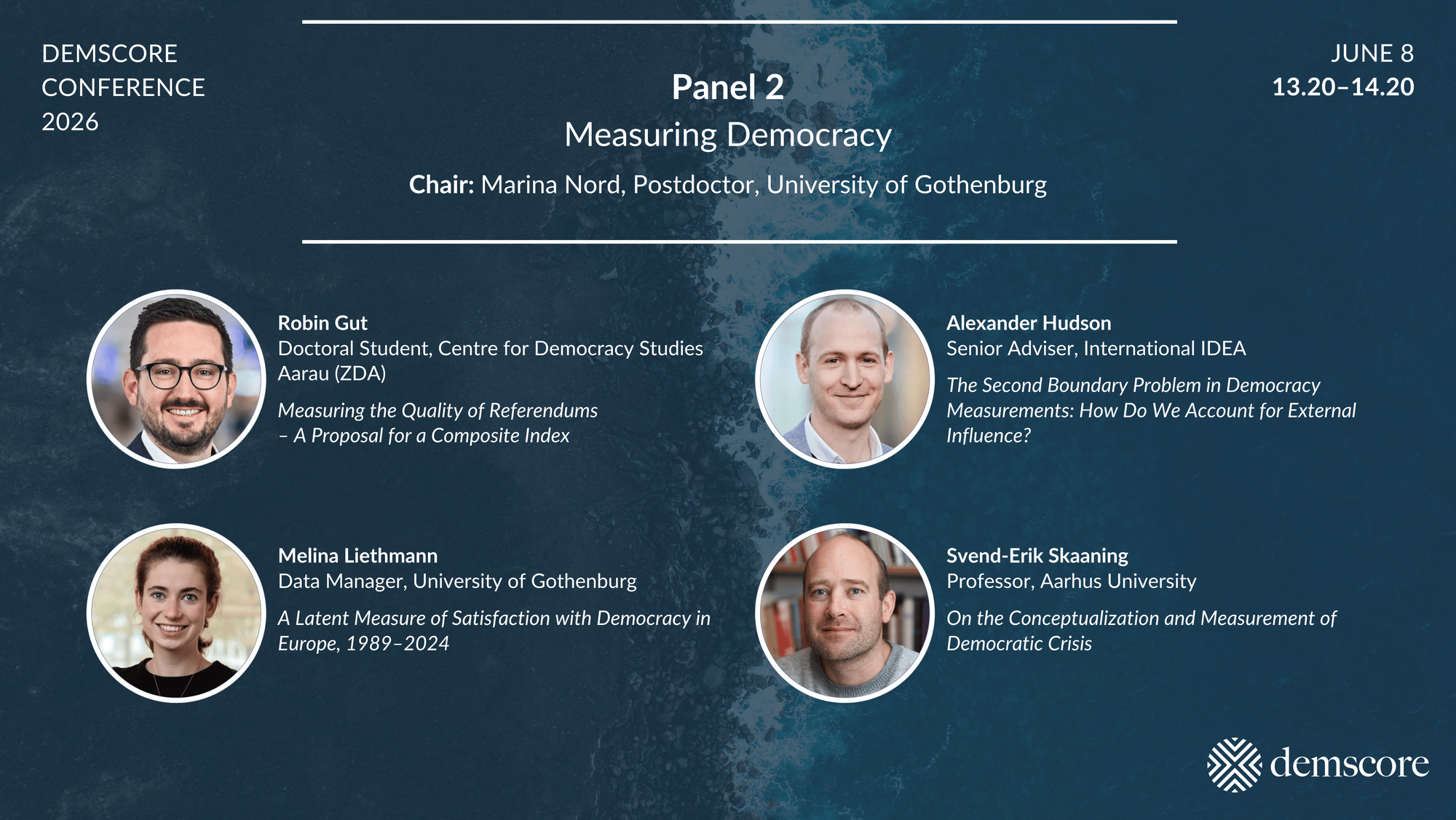
This panel focused on both the harmonization of democracy data and the conceptualization and measurement of democracy-related phenomena, ranging from democratic crises and the quality of referendums to the external dimensions of democracy. A shared concern was how democratic concepts could be defined and measured in theoretically sound and empirically useful ways.
Robin Gut (Centre for Democracy Studies Aarau, University of Zurich) presented work on referendum quality, introducing the first quantitative framework to systematically assess referendums - a gap the study addresses through a Referendum Quality Score spanning three dimensions: the political environment in which a referendum takes place, its institutional and legal setting, and the conditions under which citizens cast their vote. Testing the score on five referendums held in 2025 in Ecuador, Guinea, Hungary, Italy, and Taiwan, he finds significant variation in quality across all dimensions. The findings underscore that referendums can serve either as genuine instruments of citizen empowerment or as tools of democratic window dressing by those in power.
The panel continued with Alexander Hudson’s (International IDEA) discussion on “external democracy”, a concept aimed at capturing how states positively and negatively influence democracy beyond their own borders. Building on V-Dem and UCDP indicators, the presentation explored both theoretical and methodological challenges of measuring external democracy, discussed the utility of the concept, and mapped indicators that are most relevant to it. The key DEMSCORE data included participation in conflicts (UCDP) and government dissemination of false information abroad (V-Dem).
Learn more about Hudson's ongoing work here:
Global State of Democracy Indices | The Global State of Democracy
Melina Liethmann (University of Gothenburg) presented a methodological contribution to survey data harmonization, conducted by the Competence and Service Center for Interoperability. In their first paper, the CSCI investigates whether Bayesian ordinal latent-variable models can be used to harmonize different measures of Satisfaction with Democracy (SwD) across surveys, despite the fact that SwD is typically measured with a single survey item rather than multiple indicators. Unlike existing efforts, the authors do not use aggregated data on SwD, but work with data at the individual respondent level, directly taking into account factors such as age, sex, and education. Using data from 14 European survey projects between 1989 and 2024, the authors first construct crosswalks for SwD items before estimating latent country-year trends. They then compare these estimates with results from alternative mass public opinion models to assess validity.
Svend-Erik Skaaning (Aarhus University) concluded the panel with a reflection on the need for a more disciplined framework for conceptualizing and measuring democratic crisis, distinguishing between broader narratives of a "global democratic malaise" and situations that represent genuine high-risk threats to the core institutions of electoral democracy. Drawing on data from OECD countries, the framework introduces three diagnostic dimensions: the institutional strength of a regime, the behavioral pressures straining it, and whether that strain is intensifying or receding. The analysis shows that frequently used indicators tend to capture subsystem stress rather than crises and only very few OECD countries are currently experiencing a genuine democracy crisis.
Panel 3 and 4
Panel 3
Electoral Institutions, Parties, and Representation
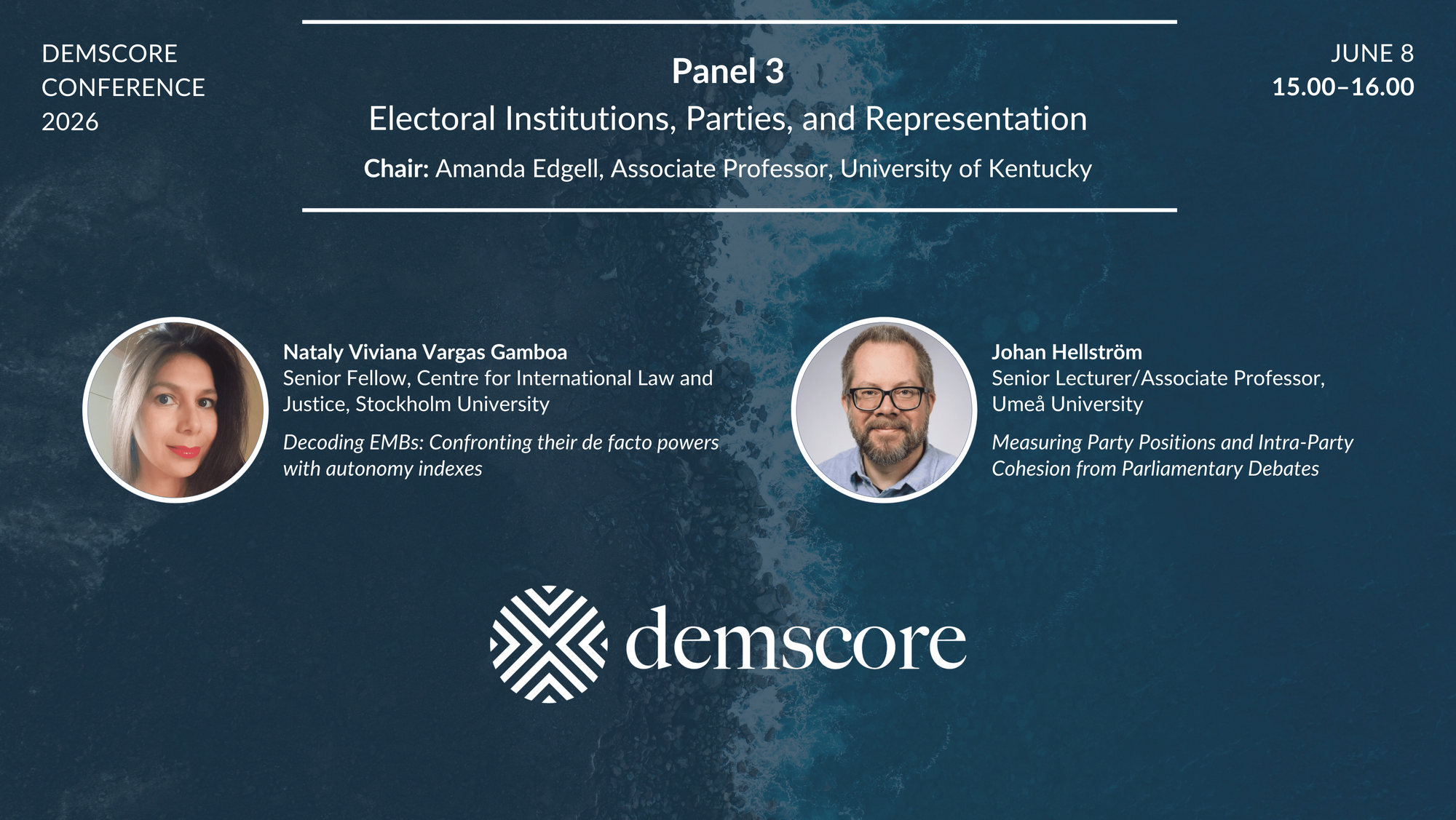
The presentations spanned the resilience of electoral management bodies under institutional pressure in Brazil, and the use of large language models to estimate party positions from Swedish parliamentary speeches.
Nataly Viviana Vargas Gamboa (Stockholm University) examined the role of Electoral Management Bodies (EMBs) in protecting democratic accountability during periods of democratic erosion. Drawing on V-Dem’s EMB autonomy indicators and focusing on the case of Brazil, her study explored how EMBs have become targets of gradual institutional attacks aimed at weakening checks and balances and favoring incumbents.
Johan Hellström (Umeå University) presented research on how parliamentary speeches can be used to estimate party positions over time. Using large language models and speeches delivered in the Swedish Riksdag between 2010 and 2025, the study develops and evaluates a method for measuring discursive party positions. The study shows how parliamentary speech can be transformed into temporally fine-grained estimates of party positions, offering a more scalable alternative to traditional data sources. The method will be used for data collection within the REPDEM module of Demscore.
Valeriya Mechkova (University of Gothenburg) examined how women’s labor rights are strategically invoked during processes of autocratization and democratization. Analyzing more than 3,000 political parties between 1970 and 2019 using V-Dem’s V-Party dataset, the study finds that attacks on women’s labor rights tend to occur relatively late in autocratization processes, whereas support for such rights emerges early during democratization.
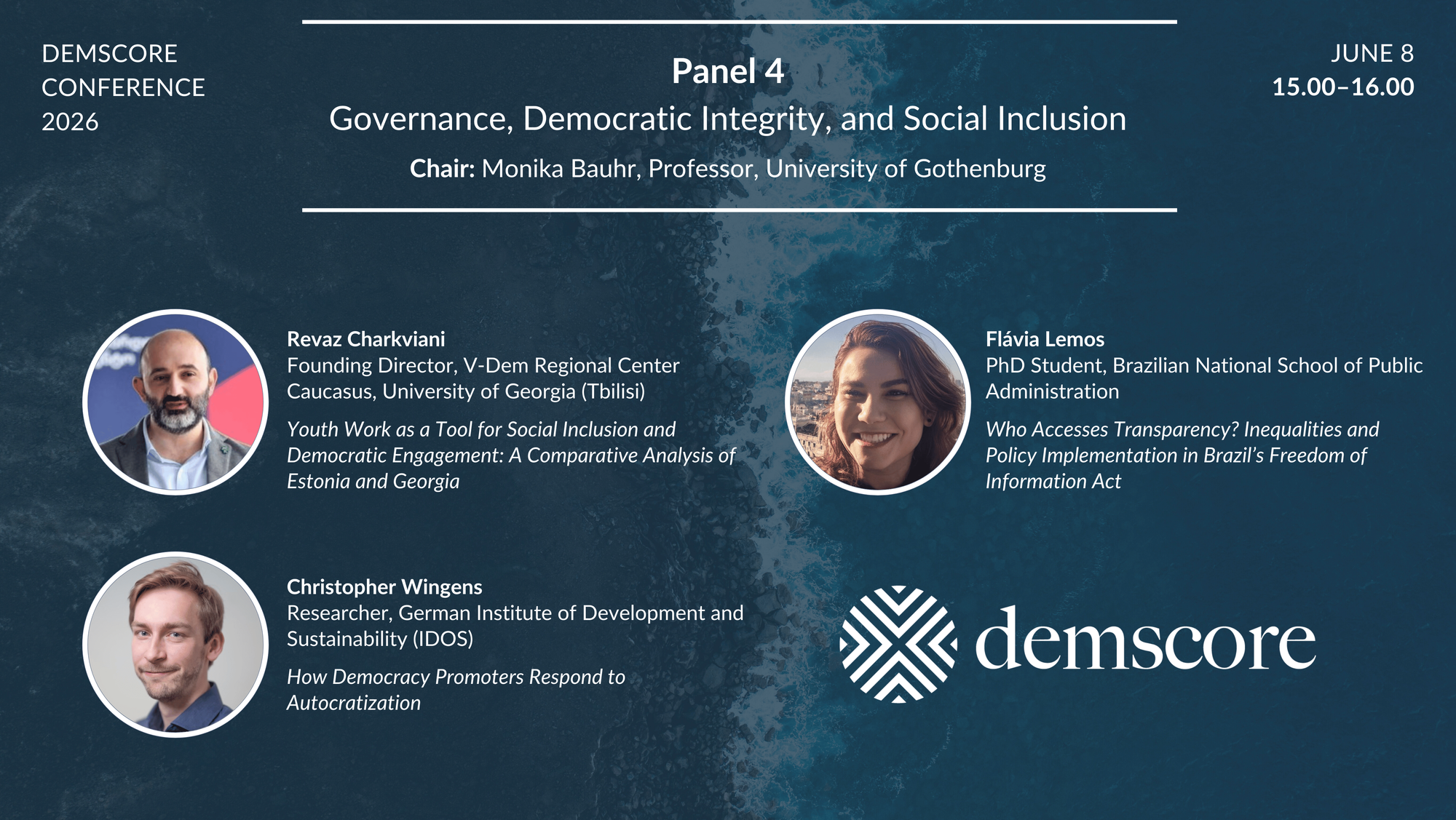
Panel 4
Governance, Democratic Integrity, and Social Inclusion
The first day of the conference concluded with research on how public institutions, civic participation, and both national and international actors can promote social inclusion, democratic participation, and democracy more broadly, both inside and outside national borders. What stood out across the presentations was the insight that many initiatives are intended to strengthen democratic resilience, participation, and accountability, yet their outcomes depend on existing inequalities and political context.
Flávia Lemos (Brazilian National School of Public Administration (ENAP)) discussed transparency policies and inequality. Analyzing the implementation of Brazil’s Freedom of Information Act through the Fala.BR platform, combined with the 2022 Demographic Census and V-Dem indicators, this study examined patterns of unequal access to public information across education, age, gender, and territorial distribution. The findings indicate that access to public information remains concentrated among more educated and socially advantaged groups. Lemos argued that, unless unequal access and participation are addressed, transparency policies may unintentionally reinforce existing social inequalities. The study also highlighted that the V-Dem Equal Access Index, which measures substantive equality in political access, reflects shifts in governments’ commitment to inequality reduction policies over time. After years of decline, recent indicators point to a gradual recovery in equality of access to political participation among these groups.
Revaz Charkviani (University of Georgia) opened the panel with his research on the role of youth work in strengthening democratic engagement and social inclusion in understudied post-communist contexts. Through a comparison of Estonia and Georgia, drawing on V-Dem and QoG data, the presentation highlighted youth work as a meso-level infrastructure of democracy that supports civic agency, inclusion, and participation. Evidence from Estonia further suggested that youth work may foster emancipative values, while also functioning as an additional source of intellectual resources beyond formal education and that its voluntary, choice-based, and relatively egalitarian environment may itself serve as an emancipative mechanism. His findings pointed to the importance of hybrid youth work architectures that combine strong legislative frameworks and institutional stability with locally grounded, culturally responsive grassroots initiatives.
Christopher Wingens (German Institute of Development and Sustainability, IDOS) concluded the panel with his quantitative analysis on how democracy promoters respond to autocratization in recipient countries. Using V-Dem data and analyzing democracy aid disbursements from OECD donor countries between 2002-2024, the study finds that democracy aid tends to increase during early stages of autocratization in recipient countries – autocratizing donors, however, are associated with a decline in aid for democratization. Wingens calls for more quantitative large-N research on donors’ responses to autocratization to study changes in donors’ strategies, such as usage of different channels or topical shifts.
Panel 5 and 6
Panel 5
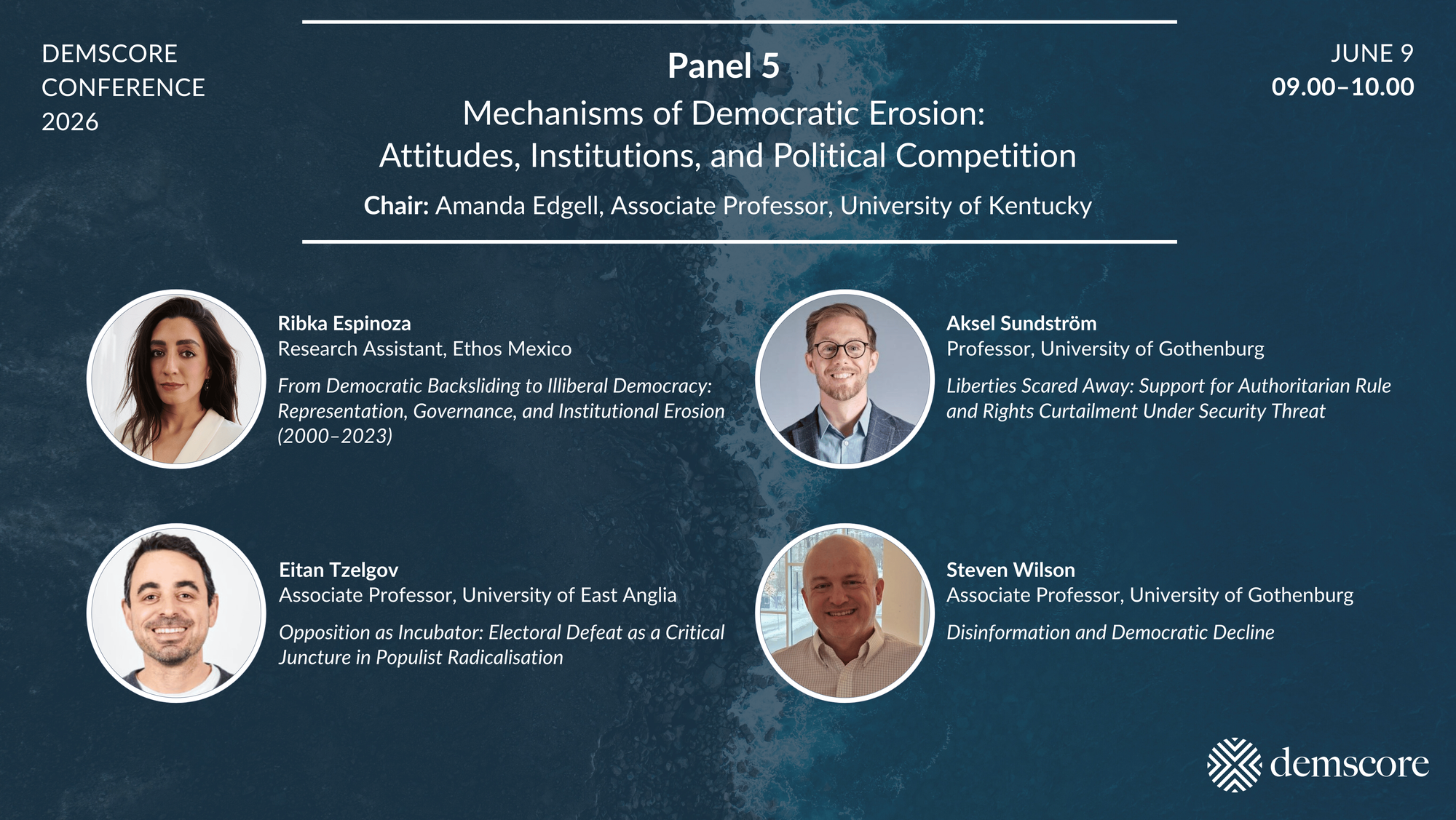
Mechanisms of Democratic Erosion: Attitudes, Institutions, and Political Competition
This panel focused on the mechanisms driving democratic erosion, bringing together researchers who studied how attitudes, political actors, and institutional dynamics interacted to weaken democratic regimes. A common theme was that democratic erosion develops through the interaction of political leadership, public reactions to perceived threats, and increasingly fragile information environments. Together, the panel highlighted the importance of strengthening democratic resilience against external and internal threats, through both robust institutions and communication environments that are less vulnerable to manipulation.
Ribka Espinoza (Ethos Mexico) opened the panel by exploring patterns of democratic backsliding associated with government crises and structural regime changes using data from REPDEM, QoG, and V-Dem. Her research suggests that democratic erosion often does not lead to authoritarian regimes but the consolidation of illiberal democracies, where elections and formal institutions remain in place, while fundamental rights, accountability, and checks and balances are steadily weakened.
Aksel Sundström (University of Gothenburg) used V-Dem data to show how security threats shape public opinion toward democracy. Researching the understudied context of Nigeria, he showed that the salience of terrorist attacks can increase support for authoritarian rule and make restrictions on freedom more acceptable when framed as necessary for security. His presentation also warned that political leaders may exploit such dynamics to legitimize repressive measures, thus contributing to democratic backsliding.
Eitan Tzelgov (University of East Anglia) shifted the focus from eroding democratic norms through populist incumbents to what happens after they lose elections. Drawing on V-Dem's V-Party dataset, QoG data, and an analysis of hundreds of thousands of tweets, he argued that electoral defeat can trigger the radicalization of populist actors, transforming them into anti-systemic actors that reject democratic outcomes and pluralism. Studying the case of Likud's loss in the 2021 elections in Israel and referring to similar cases, such as Orban's and Trump's responses to losses, he highlighted how defeated populists adapt, regroup, and radicalize after loss and continue to pose long-term threats to political stability.
The paper is part of a book project coming out next year with Columbia University Press (With Steven Wilson):
Steven Wilson (V-Dem) presented V-Dem research fellows' joint work, focusing on the effect of online disinformation campaigns on liberal democracy. Using indicators from V-Dem's Digital Society Project spanning from 2010-2020, the research finds that disinformation has a statistically significant negative effect on countries’ Liberal Democracy Index scores. Steven’s findings point to the growing importance of safeguarding information environments as part of democratic resilience.
Panel 6
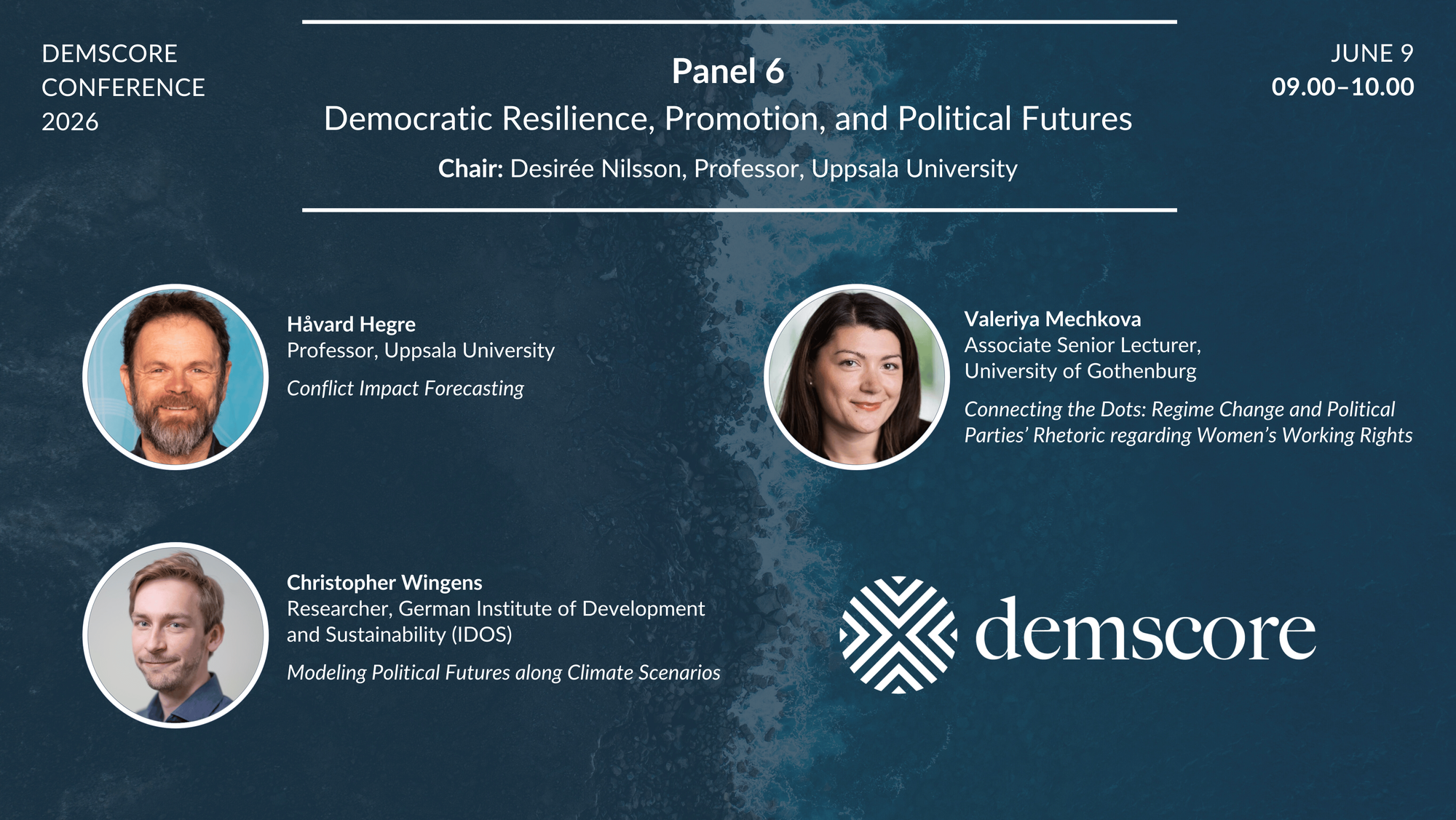
Democratic Resilience, Promotion, and Political Futures
Panel 6 covered topics across democratic and institutional research. Christopher Wingens discussed how political institutions might evolve under different climate and development futures, and Håvard Hegre presented new methods for forecasting the societal impacts of armed conflict.
Christopher Wingens (German Institute of Development and Sustainability, IDOS) and his colleagues explored how political institutions may evolve across 164 countries through the year 2100 under different climate and development scenarios. Drawing on V-Dem’s Accountability and Equality Before the Law indicators together with UCDP conflict data within the Shared Socioeconomic Pathways (SSPs) framework, their preliminary findings reveal a striking divergence: both “Green Growth” and “Fossil-fueled Development” scenarios are associated with substantial institutional improvements across regions, while those characterized by regional rivalry or inequality are linked to stagnation or even deterioration in institutional quality. Christopher’s presentation highlighted the importance of integrating political institutions more systematically and multi-dimensionally into climate and sustainability modelling.
Håvard Hegre (Uppsala University) concluded the panel with research on forecasting the societal impacts of armed conflict, building on the VIEWS early-warning system to bridge the temporal gap between rapidly unfolding monthly conflict dynamics and annually measured outcomes, such as GDP per capita. By forecasting conflict effects at a monthly resolution, the project aims to provide organizations earlier and more actionable information to respond to escalating crises before their impacts deepen. The model captures strong negative effects of armed conflict on income, infant mortality, undernourishment, and democracy levels - and proves quite successful at forecasting these impacts up to three years ahead
Valeriya Mechkova (University of Gothenburg) examined how women’s labor rights are strategically invoked during processes of autocratization and democratization. Analyzing more than 3,000 political parties between 1970 and 2019 using V-Dem’s V-Party dataset, the study finds that attacks on women’s labor rights tend to occur relatively late in autocratization processes, whereas support for such rights emerges early during democratization.
Workshop 1 and 2
The Demscore Conference 2026 proceeded with two parallel workshops, each concentrating on expanding the toolkit at different levels.
Workshop 1
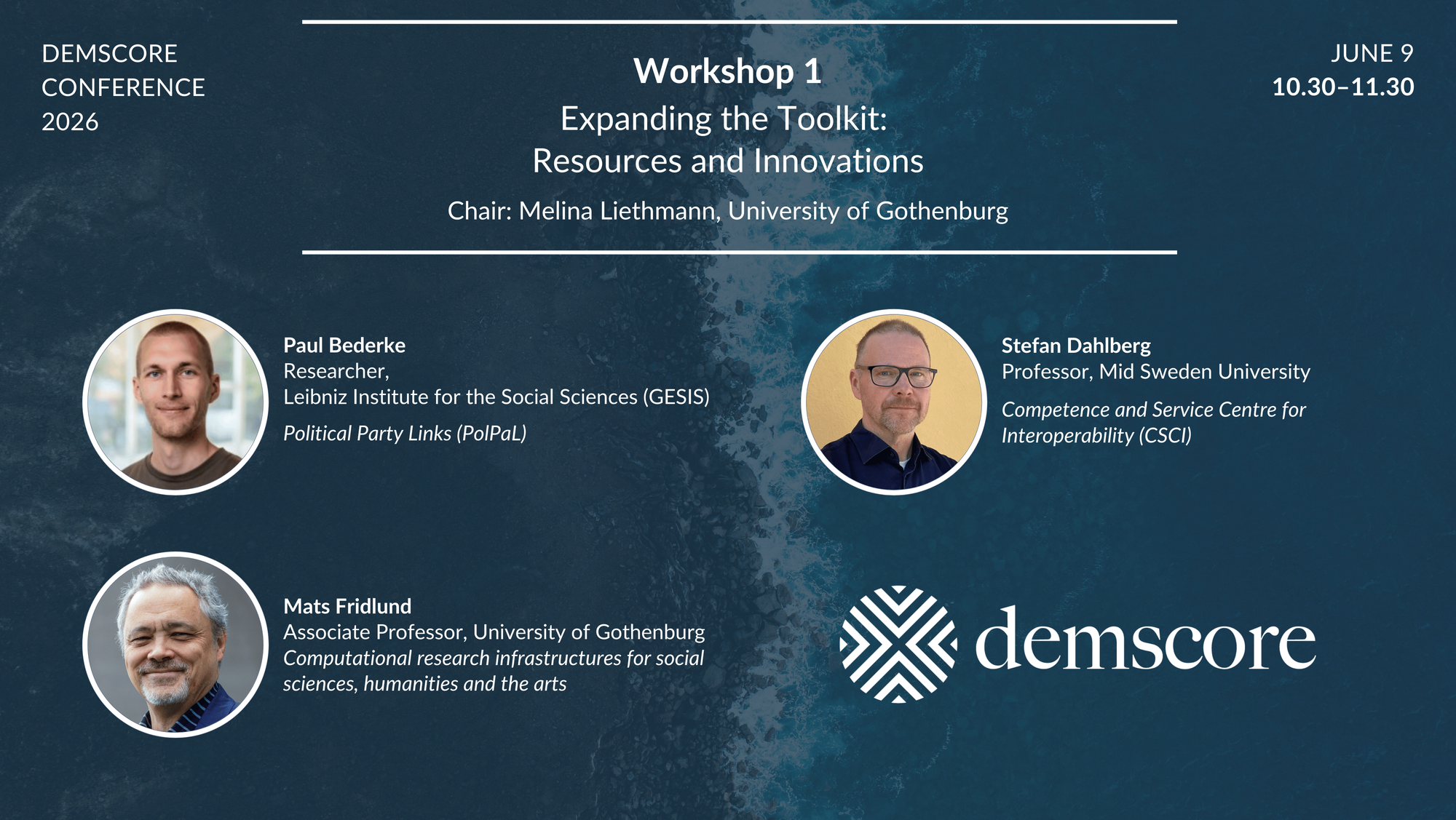
Expanding the Toolkit: Resources and Innovations
Paul Bederke (GESIS – Leibniz Institute for Social Sciences) introduced PolPaL (Political Party Links), a new linkage key database for political parties. Inspired by Party Facts, PolPaL harmonizes IDs of political parties within and across datasets in the social sciences. With PolPaL, researchers can easily link information about political parties from different datasets. This reduces the time spent on matching party IDs and allows researchers to focus on their actual work.
For further information about PolPaL and how to contribute, please visit polpal.org.
Stefan Dahlberg (University of Gothenburg) introduced the Competence and Service Center for Interoperability (CSCI) within MEDem. His main argument was that interoperability is not only a technical issue of linking data, but also a conceptual and methodological task: identifying when concepts, indicators, variables, and data sources can meaningfully be used together. CSCI will contribute by developing conceptual mappings, harmonization protocols, validation diagnostics, and ATLAS-ready specifications that make heterogeneous democracy-related data jointly usable. The presentation also outlines a stepwise strategy, beginning with survey-level interoperability and then moving toward party-level, contextual, institutional, and text data.
For further information about CSCI, please visit https://www.gu.se/en/research/competence-and-service-centre-for-interoperability-csci
Mats Fridlund (University of Gothenburg) introduced the Gothenburg Research Infrastructure in Digital Humanities (GRIDH), a resource offering expertise in digital image and text analysis, data visualization and publication, and digital knowledge production. GRIDH is part of a broader ecosystem of research infrastructures alongside Språkbanken, InfraVis, and Huminfra. Find out more at dh.gu.se.
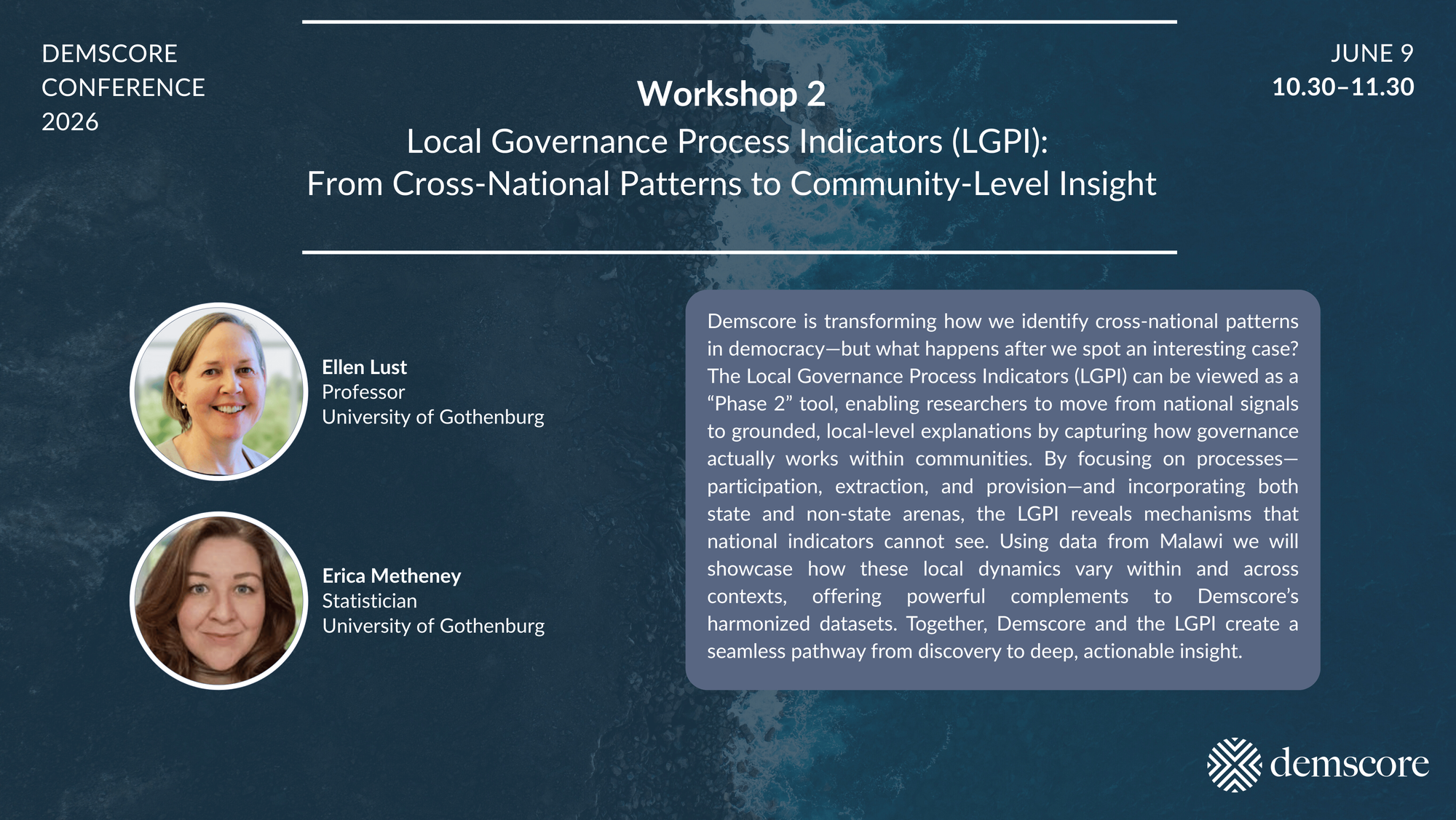
Workshop 2
Local Governance Process Indicators (LGPI): From Cross-National Patterns to Community-Level Insight
Ellen Lust and Erica Metheney (University of Gothenburg) introduced the Local Governance Process Indicators (LGPI), a tool that extends cross-national patterns in democracy research to the local level. Framed as a "Phase 2" resource, the LGPI enables researchers to move beyond national-level signals, such as those captured by Demscore, toward grounded, local-level explanations of how governance actually works within communities.
Find out more on the GLD website.
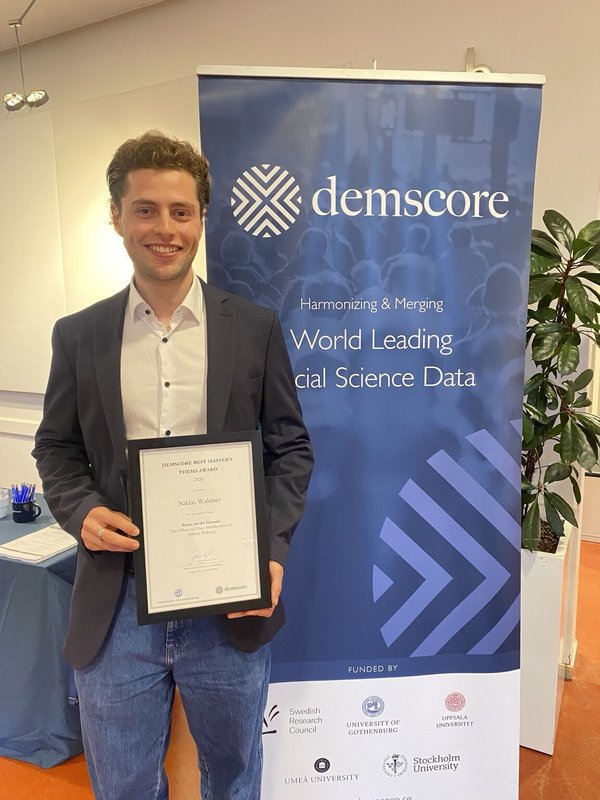
This year's Demscore Best Thesis Award went to Niklas Waldner for his thesis on the effects of mass mobilization on military policing.
Affiliation
Heidelberg University
Supervisor
Professor Aurel Croissant
In his thesis, Niklas explored why some governments deploy the military for protest policing while others do not, arguing that the key factor is whether an incumbent perceives a mass mobilization event as threatening. Using V-Dem, V-Party, and UCDP data, Niklas finds that this threat perception is shaped by the (in)congruence between regime type and the aims of mobilization: in autocracies, more frequent pro-democratic mobilization increases the predicted probability of military deployment, whereas in democracies it does not. Flawed democracies, he finds, behave more like autocracies in this regard, with incumbents perceiving pro-democratic mass mobilization events as threatening.
Building on this master's thesis research, Niklas will continue exploring the political consequences of domestic military deployments in his PhD research at the University of Gothenburg.

Text written by:
Michelle Schmidt